Colour analysis
Bright Spring or Bright Winter?
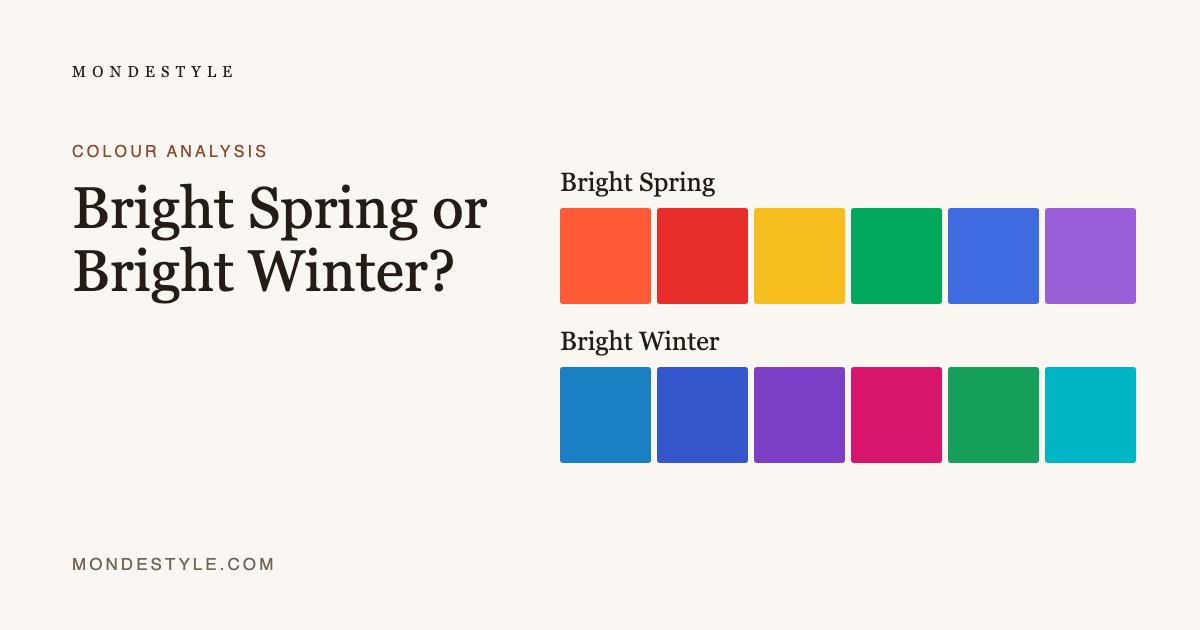
This is your palette
The difference is temperature: one palette is warm, the other cool. Depth and clarity are the same.
How to tell them apart
- Look at the veins on the inside of your wrist in daylight: green-leaning veins point warm, blue or purple ones point cool.
- Hold gold and then silver jewellery against your skin: whichever makes it look even and clear, rather than sallow or grey, is your side.
- Compare a warm ivory with an optic white under your chin: warm colourings come alive in ivory, cool ones in the cleaner white.
Side by side
Bright Spring
warm, mid-toned and clear
Warm-neutral, mid-toned and very clear. High contrast is the point; muting anything here kills it.
- Vivid Coral
- Clear Warm RedTomato red, not blue-red.
- Bright Golden Yellow
- Emerald Bright
- Bright Warm BlueYour blue. Royal, with warmth under it.
- Bright VioletClear violet – the region the old palette could not reach.
- Best whiteBright IvoryBest white for you. Bright, with the barest warm cast.
- Best darkDark ChocolateUse instead of black. Warm enough to sit beside your gold.
Bright Winter
cool, mid-toned and clear
Cool-neutral, mid to deep, and very clear. High contrast is correct here, and pure white and true black are genuinely yours.
- Clear Cerulean
- Royal Blue
- True Violet
- Hot Cerise
- Emerald Green
- Vivid Turquoise
- Best whiteOptic WhiteBest white for you, and one of very few seasons that can say so.
- Best darkTrue BlackYour best dark neutral – and here that really is black.
Save this palette
How to find your palette
Colour analysis reads three things in your colouring: warm or cool, light or deep, clear or soft. The quiz asks about your eyes, hair and skin, looked at in a mirror by a window in daylight. It never photographs or scans your face, and the palette it finds is yours to keep.