Colour analysis
Soft Summer or Soft Autumn?
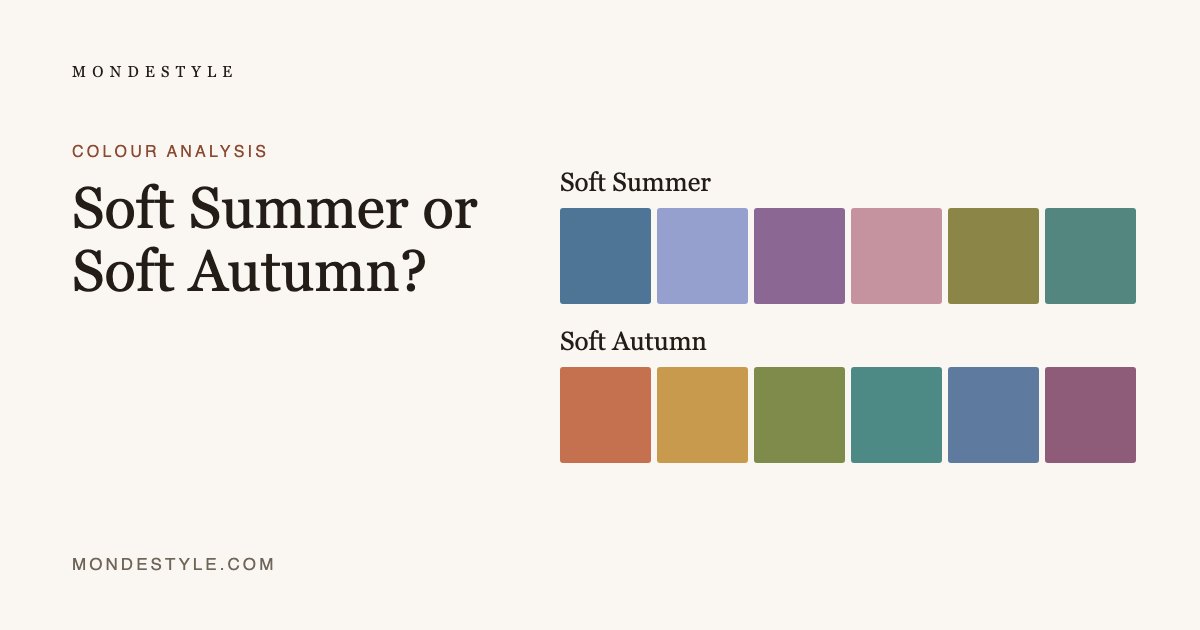
This is your palette
The difference is temperature: one palette is warm, the other cool. Depth and clarity are the same.
How to tell them apart
- Look at the veins on the inside of your wrist in daylight: green-leaning veins point warm, blue or purple ones point cool.
- Hold gold and then silver jewellery against your skin: whichever makes it look even and clear, rather than sallow or grey, is your side.
- Compare a warm ivory with an optic white under your chin: warm colourings come alive in ivory, cool ones in the cleaner white.
Side by side
Soft Summer
cool, mid-toned and muted
Cool, mid-toned and muted. Everything is slightly greyed, and the palette holds together because nothing in it is louder than anything else.
- Dusty Blue
- Soft Periwinkle
- Muted Mauve
- Rosewood Pink
- Soft Olive GoldA cool season can wear olive, as long as it stays greyed.
- Sage Teal
- Best whiteCool Soft WhiteBest white for you. Soft, slightly warmed grey-white.
- Best darkSoft CharcoalUse instead of black. Your best dark neutral.
Soft Autumn
warm, mid-toned and muted
Warm, mid-toned and muted. Every shade has a little grey folded into it; that is the season, not a fault.
- Warm Terracotta
- Soft Ochre
- Moss Green
- Muted Teal
- Dusty Denim BlueYour blue. Soft Autumn can wear denim navy; it must be dusty.
- Soft AubergineThe Autumn staple the old palette had no room for.
- Best whiteWarm Oyster WhiteBest white for you. Oyster, not optic.
- Best darkDark CocoaUse instead of black. Your best dark.
Save this palette
How to find your palette
Colour analysis reads three things in your colouring: warm or cool, light or deep, clear or soft. The quiz asks about your eyes, hair and skin, looked at in a mirror by a window in daylight. It never photographs or scans your face, and the palette it finds is yours to keep.