Colour analysis
Soft Autumn or True Autumn?
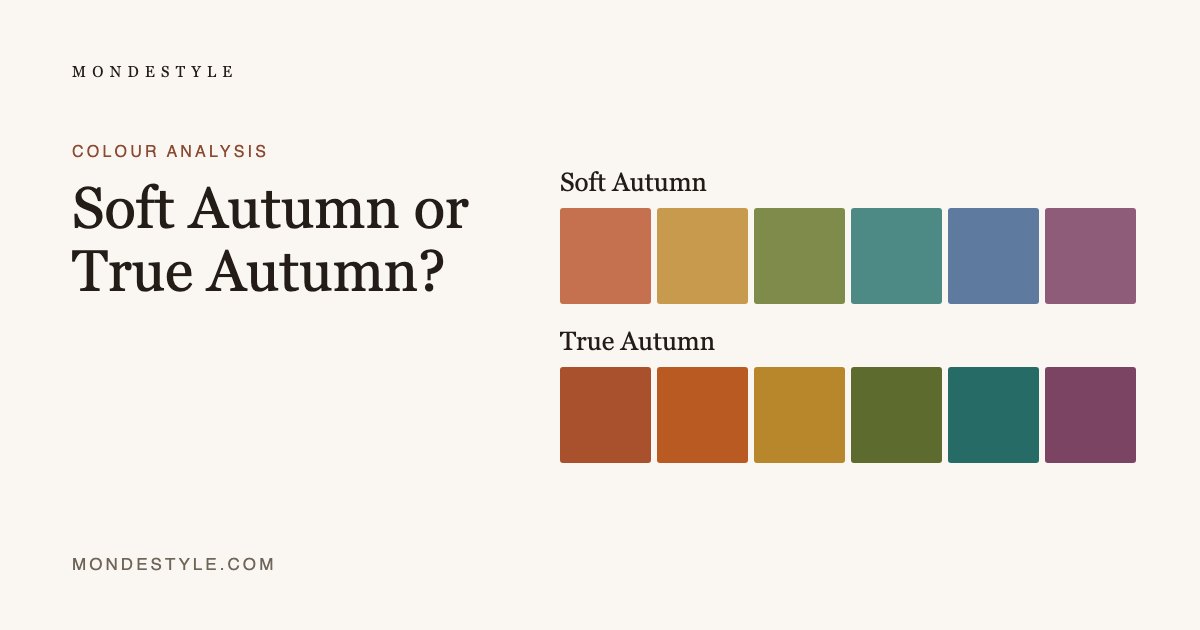
This is your palette
The difference is depth: one palette is lighter, the other deeper. Temperature and clarity are the same.
How to tell them apart
- Compare your hair and your skin in daylight: the deeper the two are together, the deeper the palette that carries you.
- Hold a pale grey and then a charcoal near your face: the one that sits quietly is closer to your depth, the other either swamps you or washes you out.
- Look at a black-and-white photograph of yourself: if it reads mostly light, start with the lighter palette.
Side by side
Soft Autumn
warm, mid-toned and muted
Warm, mid-toned and muted. Every shade has a little grey folded into it; that is the season, not a fault.
- Warm Terracotta
- Soft Ochre
- Moss Green
- Muted Teal
- Dusty Denim BlueYour blue. Soft Autumn can wear denim navy; it must be dusty.
- Soft AubergineThe Autumn staple the old palette had no room for.
- Best whiteWarm Oyster WhiteBest white for you. Oyster, not optic.
- Best darkDark CocoaUse instead of black. Your best dark.
True Autumn
warm, deep and muted
Warm, deep and rich. Muted, but never dull – these are spice and metal colours, not dust.
- Burnt Sienna
- Warm Rust
- Golden Ochre
- Forest Olive
- Deep Teal
- Warm AubergineAubergine is an Autumn staple. It belongs here.
- Best whiteWarm Ivory CreamBest white for you. Cream, never chalk.
- Best darkDark Warm BrownUse instead of black. Your best dark neutral.
Save this palette
How to find your palette
Colour analysis reads three things in your colouring: warm or cool, light or deep, clear or soft. The quiz asks about your eyes, hair and skin, looked at in a mirror by a window in daylight. It never photographs or scans your face, and the palette it finds is yours to keep.