Colour analysis
Light Spring or Soft Autumn?
This is your palette
The difference is depth: one palette is lighter, the other deeper. Temperature and clarity are the same.
How to tell them apart
- Compare your hair and your skin in daylight: the deeper the two are together, the deeper the palette that carries you.
- Hold a pale grey and then a charcoal near your face: the one that sits quietly is closer to your depth, the other either swamps you or washes you out.
- Look at a black-and-white photograph of yourself: if it reads mostly light, start with the lighter palette.
Side by side
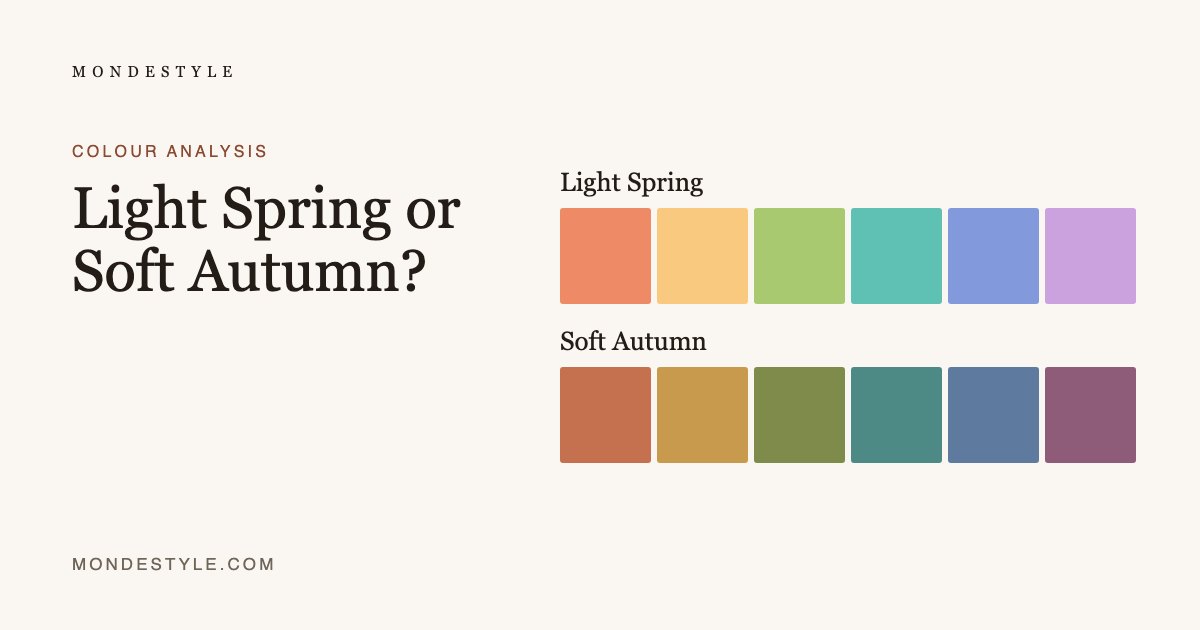
Light Spring
warm, light and muted
Warm, light and gently muted. Spring is defined by clarity, so nothing here is dusty – it is Light Spring with the volume down, not Soft Autumn.
- Peach Bloom
- Warm Apricot
- Fresh Leaf
- Spring Turquoise
- Cornflower PeriwinkleYour blue. Warm-leaning, never inky.
- Sweet VioletLight Spring can wear violet; it just has to stay light.
- Best whiteWarm IvoryBest white for you. Optic white looks blue against this skin.
- Best darkCocoa BarkUse instead of black. This is your dark neutral.
Soft Autumn
warm, mid-toned and muted
Warm, mid-toned and muted. Every shade has a little grey folded into it; that is the season, not a fault.
- Warm Terracotta
- Soft Ochre
- Moss Green
- Muted Teal
- Dusty Denim BlueYour blue. Soft Autumn can wear denim navy; it must be dusty.
- Soft AubergineThe Autumn staple the old palette had no room for.
- Best whiteWarm Oyster WhiteBest white for you. Oyster, not optic.
- Best darkDark CocoaUse instead of black. Your best dark.
Save this palette
How to find your palette
Colour analysis reads three things in your colouring: warm or cool, light or deep, clear or soft. The quiz asks about your eyes, hair and skin, looked at in a mirror by a window in daylight. It never photographs or scans your face, and the palette it finds is yours to keep.