Colour analysis
True Winter or Deep Winter?
This is your palette
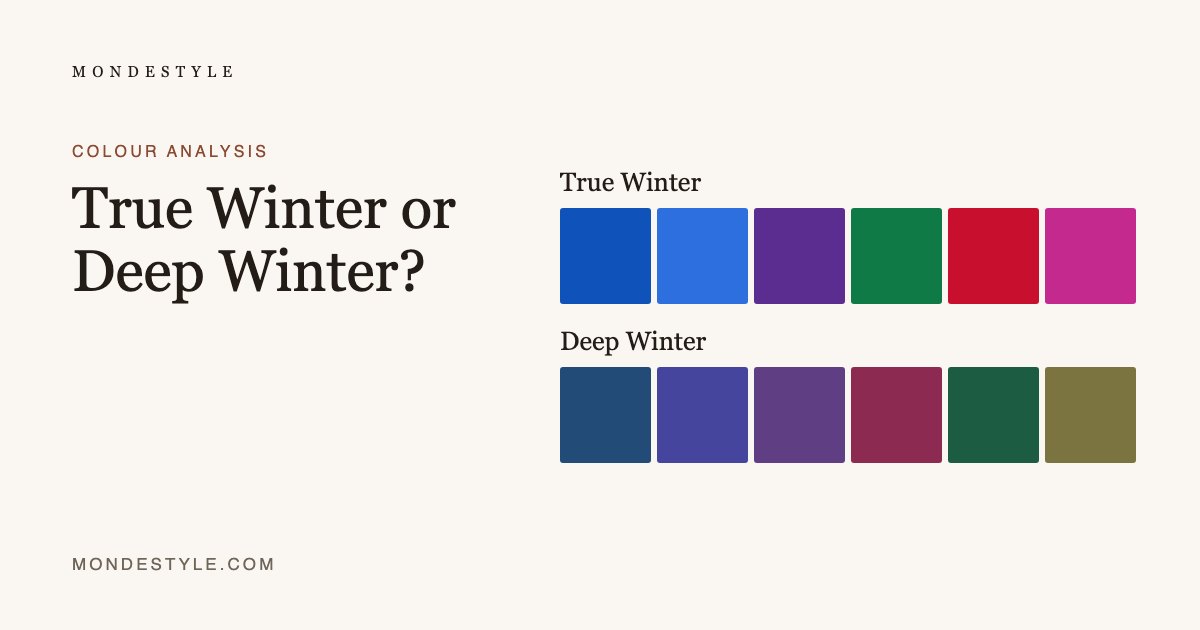
The difference is clarity: one palette is clear and bright, the other soft and muted. Temperature and depth are the same.
How to tell them apart
- Hold a clear, saturated colour and its dusty version under your face, one after the other: if you belong to the clear palette, the clear one makes your eyes look brighter.
- Notice how much contrast there is between your hair, skin and eyes: strong contrast carries clear colour, low contrast suits soft colour.
- If people comment on a bright colour rather than on you when you wear it, the softer palette is likely yours.
Side by side
True Winter
cool, deep and clear
Cool, deep and clear. Blue-based throughout, with real black and real white as working neutrals rather than as a last resort.
- True Blue
- Cool Cobalt
- Royal Purple
- Emerald Green Deep
- Cherry RedBlue-based red, never tomato.
- Magenta Fuchsia
- Best whitePure WhiteBest white for you. Optic white, and it is correct.
- Best darkJet BlackYour best dark neutral – one of the few seasons for which it is.
Deep Winter
cool, deep and muted
Cool, deep and slightly muted. Depth carries the palette; the muting only keeps it from becoming a Bright Winter.
- Deep Marine
- Indigo Violet
- Deep Amethyst
- Wine Berry
- Dark Forest Cool
- Muted Gold OliveA deep cool season can wear olive if it is dusty and dark.
- Best whiteCool Cream WhiteBest white for you. A shade off optic, which suits the muting.
- Best darkSoft BlackUse instead of true black – a hair softer, and it shows.
Save this palette
How to find your palette
Colour analysis reads three things in your colouring: warm or cool, light or deep, clear or soft. The quiz asks about your eyes, hair and skin, looked at in a mirror by a window in daylight. It never photographs or scans your face, and the palette it finds is yours to keep.